Showing posts with label horse breeds. Show all posts

Friday, 22 February 2013

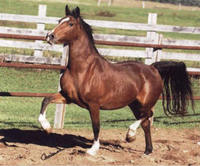
Thoroughbred Horses

We Photo: Five Furlongs
We love everything about horses and one of the most fascinating aspects of horse care and any interest in Horses and professional riding, is horse breeding. 

The Thoroughbred is a horse breed best known for its use in horse racing. Although the word 'thoroughbred' is sometimes used to refer to any breed of pure-bred horse, it technically refers only to the Thoroughbred breed. 

Thoroughbreds are known for their agility, speed and spirit and, the breed, as it is known today, originally developed in 17th- and 18th-century England, when native mares were crossbred with imported Oriental stallions of Arabian, Barb, and Turkoman descent. 

During the 18th and 19th centuries, the Thoroughbred spread throughout the world; they were imported into North America starting in 1730 and into Australia, Europe, Japan and South America during the 19th century. Millions of Thoroughbreds exist today, and more than 118,000 foals are registered each year worldwide.

Thoroughbreds are used mainly for racing, but are also bred for other riding disciplines such as show jumping, combined training, dressage, polo, and fox hunting.

Thoroughbred racehorses perform with maximum exertion, which can resulted in high accident rates and health problems. There are several theories for the reasons behind the prevalence of accidents and health problems in the Thoroughbred breed, and research continues. However, Thoroughbred horses are still highly sought after for both their aesthetic qualities and athletic brilliance. 

Sunday, 17 February 2013

Different Horse Breeds From Around the World

Like their owners, Horses come in different shapes and sizes! You horse will always be unique to you, but there are so many factors that influence the look, shape, size and behaviour of horses resulting in dozens of different breeds each with their own defining characteristics.

First off, here's a bit of history.

Horses were one of the first animals that were domesticated by man for meat and milk. History records tell us that horses were first tamed by the people of the steppes region of central Asia around 3000 BC to 4000 BC. 

There are even cave paintings made by Stone Age man that depict images of animals with strong, erect heads with manes that are similar to the modern horse. There are a variety of different horse breeds that are diverse with respect to appearance, nature and toughness.


Here is a selection of some exotic horse breeds from all around the world:


Akhal Teke
The shimmering Akhal Teke
Akhal Teke: is one of the ancient horse breeds. Its presence dates back to about 500 BC. Also known as Turkoman, Akhal Teke horse has a self willed nature and the rider can hardly do anything if it changes its mood. Despite its bad temper, the horse has a majestic appearance with narrow chest and slender in appearance. Has been prized possession for central Asiatic nomadic tribes because the horse being very hardy which can travel for long distances by crossing deserts without a drop of water. The horse is a long jumper and is often seen to be taking part in sports.


Anglo Arabic
Anglo Arabic
Anglo Arabic: The horse is the result of years of interbreeding. The horse is native to Britain, France and Poland. It is by nature brave and joyous. It has a long neck often forming an arch. The head of the horse is delicate with large highly expressive eyes. Have a broad shoulder and neck but with a short back. The bones of the horse are generally of good quality and the legs are long and slender in form. These horses are commonly used for sports, eventing and for hunting.


Cleveland Bay
Cleveland Bay: This breed of horse is native to England. The horse is generally of brown in colour. Do not purchase this breed of horse with white marks. You may purchase the horse if it has some traces of white hair or white specks near the legs. The horse is extremely hardy. The entire body structure has convex like appearance and has a large head. This breed of horse is characterized by kind appearing eyes and is highly intelligent. This horse is nick named as Chapman horse as during the 16th and the 17th centuries the horse was used as the mode of transport for travelling long distances by the Chapmen or the merchants.


Hackney
Hackney: This breed of horse has its origin in England. It grows up to the size of about 14 hh to 15 hh in height. The horse is genuinely very alert and is also very sweet natured. It has a straight head with strong shoulders. The horse has flexible joints and strong legs and has a flamboyant pace. Each gallop is taken with a second’s rest of the foot in air resulting in a graceful movement.


Caspian
The Caspian
Caspian: This breed of horse is an exotic one which a few decades back were through to be extinct. The variety of horse falls in the miniature breed of the horses. The horse was highly coveted by people of ancient civilization to carry out ritualistic purposes. These horses are native to Persia, Mt Elbrutz region and Caspian Sea. These horses are characterized by bay, brown or chest nut colours. The head has the appearance of the Arabian horses with small ears and prominent eyes. The horse is quite active and has a tendency of jumping while galloping.


Tuesday, 5 February 2013

Miniature Horses

What's the science that makes smaller things more adorable? Who knows, but whether it's puppies, kittens, foals, or even babies, even the most serious among us would surely melt at the sight of these tiny critters.

But it's not just infants that get all of the attention. There are in fact several breeds of naturally tiny miniature horses. 


Miniature horses are found in many nations, particularly in Europe and the Americas. The designation of what qualifies as a miniature horse is determined by the height of the animal, which, depending on the particular breed involved, is usually less than 34–38 inches (86–97 cm). While miniature horses are the size of a very small pony, many retain horse characteristics and are considered "horses" by their respective registries. Like regular, full-sized horses, they have various colours and coat patterns.

Miniature horses are friendly and interact well with people. For this reason they are often kept as family pets, though they still retain natural horse behaviours, including a natural fight or flight instinct, and must be treated like an equine, even if they being kept as a companion animal or domestic pet. They are also trained as service animals, similar to assistance dogs for people with disabilities.

While miniature horses can be trained to work indoors, they are still real horses and are healthier when allowed to live outdoors (with proper shelter and room to run). They are generally quite hardy, often living longer on average than some full-sized horse breeds; the average life span of miniature horses is from 25 to 35 years.

In popular culture they are also adored, as shown by this great clip from popular US comedy show, Parks and Recreation, which shows the employees of the local government of a small city in Indiana getting a little too excited over their city's official mascot, 'Lil Sebastian'!